
Modernizing energy trading and portfolio management for the Baltic market
We replaced spreadsheet-based workflows with a unified energy trading ecosystem that automates trading, forecasting, and portfolio management across the Baltic market.
Why spreadsheets weren't enough
NPM was managing massive energy portfolios across the Baltics using Excel. While this worked in the early days, it became a ticking time bomb as they grew. In the energy market, a single copy-paste error isn’t just a headache—it can cost thousands of euros in a single hour.
They were juggling different rules for different countries, manual data from grid operators, and a volatile market. They didn't just need a new tool. They needed a way to eliminate human error and see their entire business in real-time.
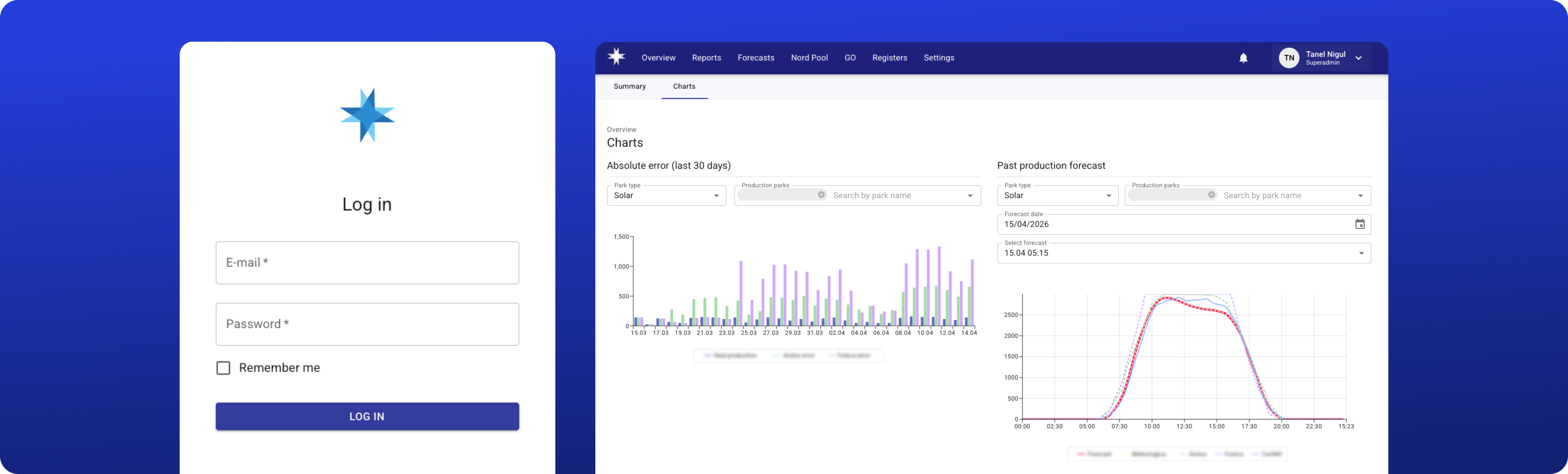
A smarter way to manage energy
We didn't build a one-size-fits-all product. We built a modular platform designed to handle the messy reality of energy trading. It’s powerful enough to process massive amounts of data, yet simple enough for the team to use every day without stress.
A Four-Pillar Energy Platform
Hands-free Grid Management
- 1Automated metering point data loading from Elering (EE) and Litgrid (LT)
- 2Cross-border data exchange across different formats and APIs
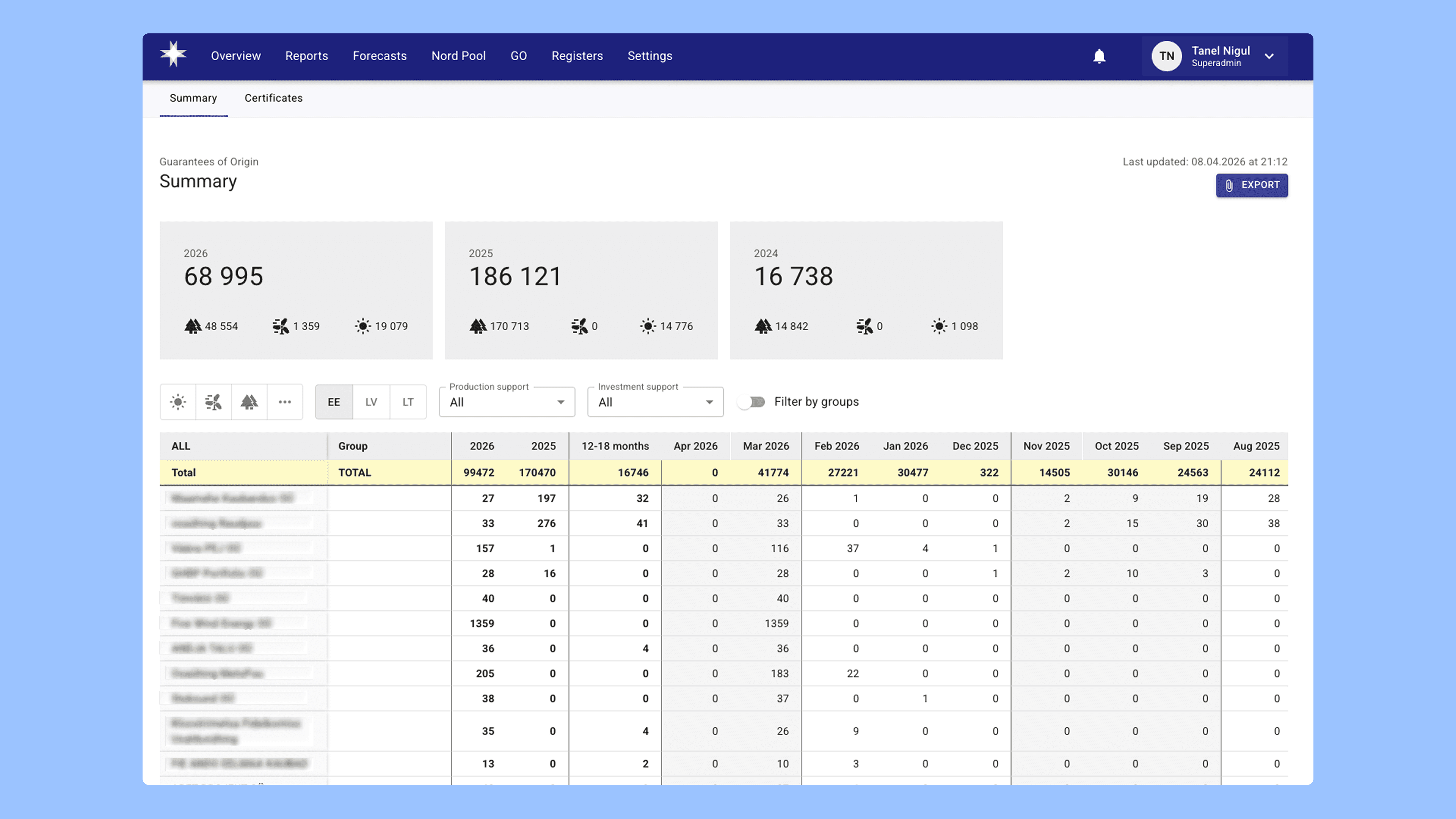
- 3Automated Guarantees of Origin (GO) registry synchronization
- 4Automated admin cost and balance data processing
- 5Data validation and anomaly detection
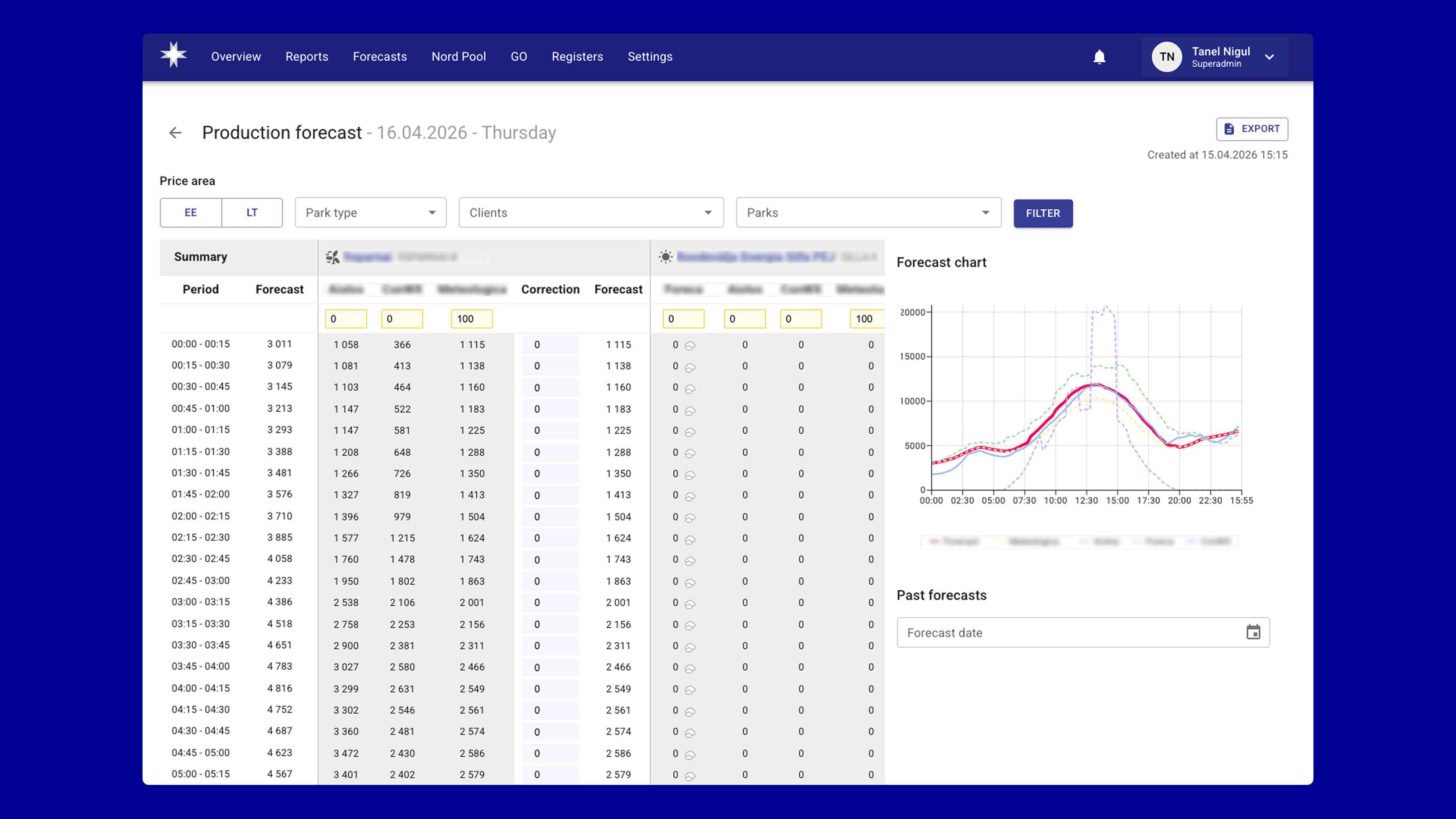
Precise Production Forecasts
- 1Forecast providers integrations for each park location
- 2Weather-based and elevation coefficients for production calculation
- 3Component-level park management (turbines, panels, inverters)
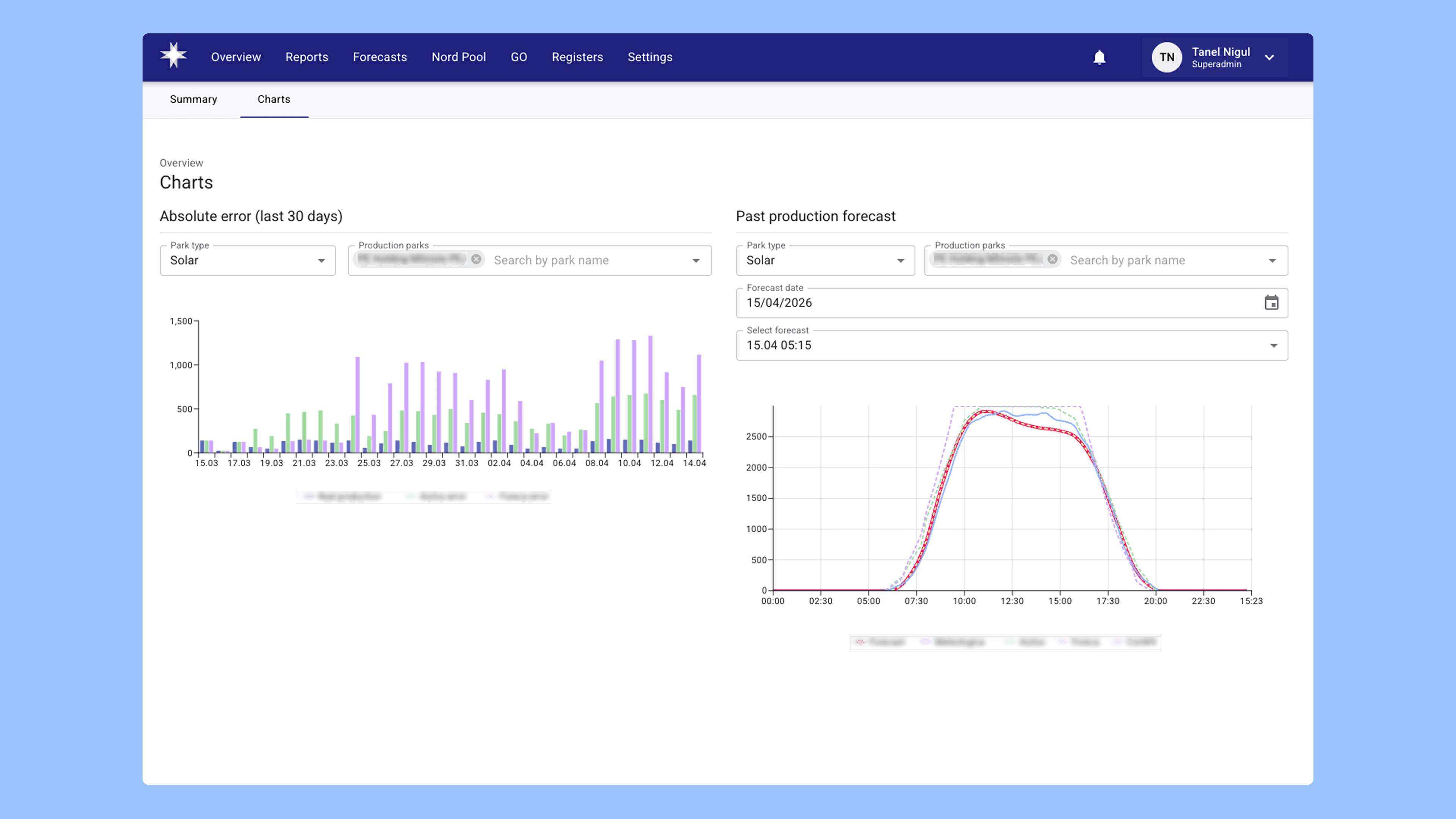
- 4Production data and forecast comparison analysis
- 5Automated forecast correction based on real-time data
Automated Market Operations
- 1Real-time participation and trading in Nord Pool auctions
- 2Automated trade distribution across client sub-plans
- 3Risk management with price limits and automated alerts
- 4Trading history visualization and report generation
- 5Multiple traders working simultaneously in a unified system
Smart Battery Orchestration
- 1Automated frequency restoration reserve (mFRR) bid generation
- 2Consumption and production forecast generation
- 3Battery charge/discharge schedule optimization
- 4Real-time battery monitoring and reporting
- 5Automated result analysis and profitability reporting
Saving 160+ hours every month while scaling without limits
The most immediate impact was the gift of time. By automating the data heavy-lifting, the platform saves NPM over 160 hours of manual work every single month. That is an entire full-time role’s worth of spreadsheets, manual checks, and "copy-paste" stress gone.
But the true value is in the future. Because the system is modular and cloud-native, NPM now has potentially endless scalability. They can onboard dozens of new customers or enter new country markets without adding administrative overhead. The platform doesn't just manage their current business; it powers their growth.
Front-end
TypeScript
React
Back-end
Kotlin
Spring Boot
Infrastructure
AWS
Docker
Monitoring
Sentry
Grafana
Technology choices and architecture
- Backend: Kotlin & Spring Boot
- Built for high-stakes accuracy where a decimal error costs real money. Kotlin’s type system stops bugs before they hit production, while Spring Boot handles complex scheduling for autonomous Nord Pool auctions.
- Database: PostgreSQL
- 148 schema migrations and counting. The database evolves with the business, handling everything from 15-minute grid granularity to battery SOC history and complex solar forecasting on a single, high-performance cluster.
- External Integrations
- A central hub connecting Elering (grid data), Nord Pool (trading), and multiple weather providers. Each integration is isolated in its own module, ensuring a failure in one external API never takes down the entire system.
- Infrastructure: AWS + Terraform
- Production runs on ECS Fargate, managed entirely via Terraform for perfect reproducibility. Auto-scaling is tuned to the energy market’s pulse, easily absorbing load spikes during critical auction windows.
- Observability
- In energy trading, silent failures are the biggest risk. We use Sentry and Micrometer to track submission success rates and forecast deviations, alerting the team before a missed deadline impacts the market.
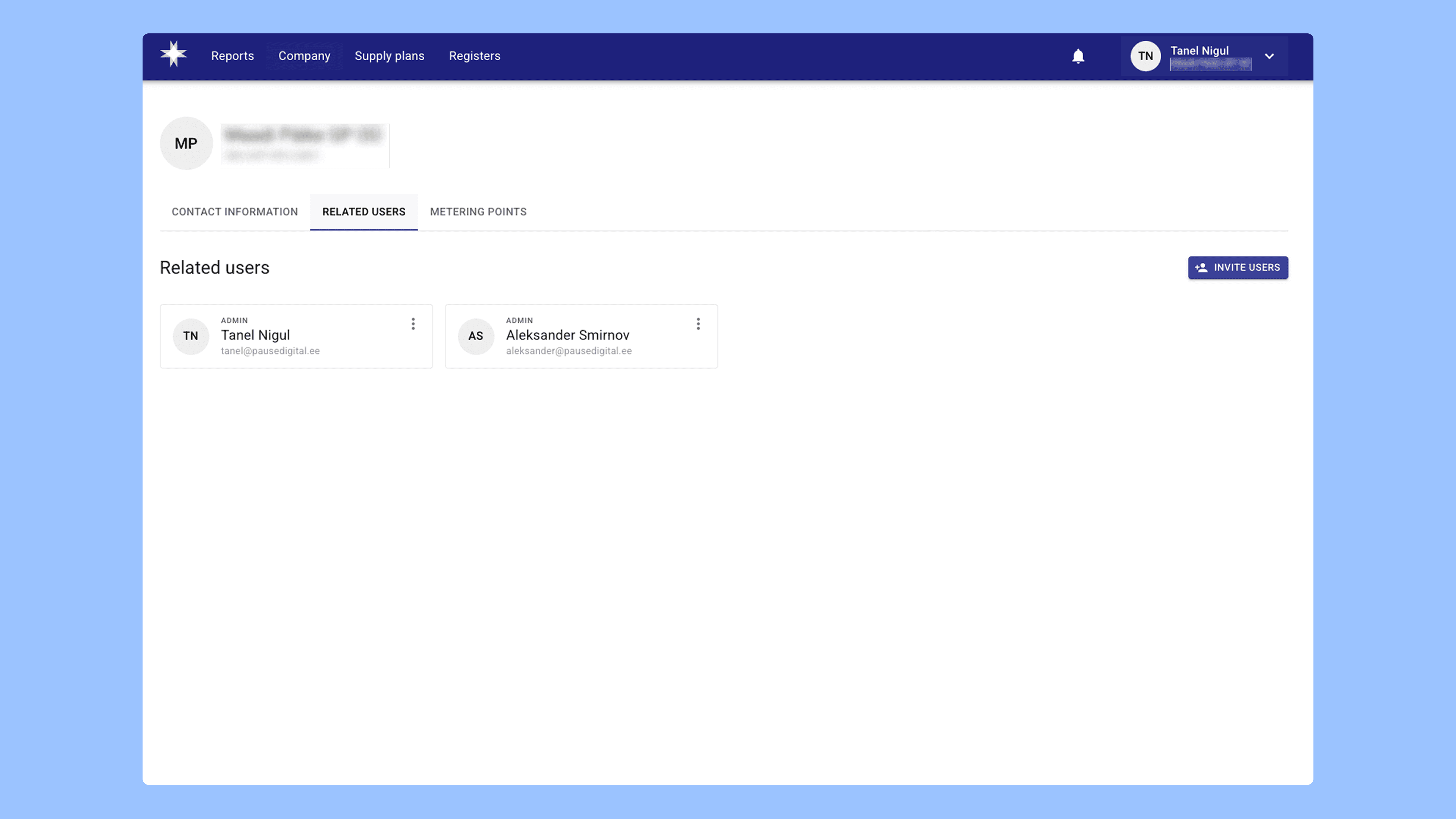
Platform Overview
Browse more work
See more projects that have software solutions aligned with business goals.




Let's take your energy business to the next level
Ready to stop fighting with spreadsheets and start scaling? Whether it's reclaiming hundreds of hours or building a platform that grows with your customer base—we have the experience to make it happen. Let’s talk.





